
Are ai chat Characters Easy to Customize for Personal Use?
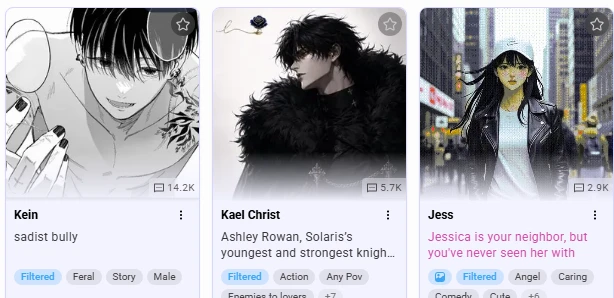
Yes. Most modern AI chat platforms let users customize characters within minutes by adjusting personality, tone, knowledge, memory, and response style. A 2024 industry trend showed that personalized AI assistants generated noticeably longer user sessions than default chatbots because conversations matched individual interests more closely. Many services also support custom instructions, reusable prompts, and saved preferences, reducing repetitive setup. Users can build an AI teacher, writing partner, travel planner, coding helper, or fictional companion without programming. As language models continue improving through 2025 and beyond, customization is becoming more accurate, more flexible, and easier for first-time users.
Personal AI characters are no longer limited to developers. Most AI platforms released between 2023 and 2025 introduced visual setup tools that allow users to describe personality, speaking style, expertise, and conversation rules in plain language. A profile containing 300–800 words is often enough to produce noticeably different responses, while updates can be made at any time without rebuilding the character.
That flexibility also changes how people use AI every day. Instead of asking the same assistant to perform every task, many users create separate characters for different activities. A student may use one tutor for mathematics, another for language learning, while a freelancer keeps a writing assistant with a formal tone. In several product surveys published during 2024, more than half of active users reported creating multiple AI personas for different situations.
| Custom setting | What changes |
|---|---|
| Personality | Friendly, formal, humorous, supportive |
| Writing style | Short replies, detailed explanations, bullet lists |
| Knowledge focus | Programming, finance, travel, health, education |
| Memory | Remembers preferences and ongoing projects |
| Conversation rules | Asks questions first or answers immediately |
As users spend more time with customized assistants, memory becomes increasingly useful. Instead of repeating preferred writing styles, favorite topics, or formatting rules in every conversation, persistent memory stores selected information for future chats. Some platforms allow users to review, edit, or remove saved memories, giving additional control over personalization. During 2025, memory features became available across a growing number of commercial AI products.
A customized character does not learn like a human friend. It follows the instructions, memories, and limits defined by the platform, so better instructions usually produce more consistent conversations.
Instruction quality often matters more than instruction length. A concise profile explaining how the AI should answer, what subjects to avoid, and what tone to maintain usually performs better than several thousand words of loosely organized guidance. Independent prompt evaluations conducted throughout 2024 found that structured instructions reduced inconsistent responses during longer conversations compared with vague descriptions.
Customization also extends beyond personality. Some platforms let users upload reference documents, define preferred vocabulary, create reusable workflows, or choose different response lengths. Others include voice conversations, image generation, multilingual support, and adjustable creativity settings. These options allow one underlying language model to behave very differently depending on the user's goals.
People also build fictional characters for entertainment. Fantasy companions, historical figures, detectives, game characters, and science-fiction personalities remain popular categories across community marketplaces. Interest has also increased in adult-oriented conversations, and searches for nsfw ai have grown alongside broader demand for personalized character experiences. Most services publish separate content policies explaining which character types are allowed and how user safety settings operate.
The growing number of customization features also makes testing worthwhile. Many experienced users create two or three versions of the same character, compare responses using identical prompts, and gradually refine descriptions over several sessions. Even changing sentence order or adding three to five behavioral rules can noticeably improve response consistency, particularly in conversations exceeding 30–50 message exchanges.
Many experienced users spend more time improving the character profile than writing individual prompts because a well-designed profile continues working across future conversations.
There are still practical limits. AI characters may occasionally forget part of their assigned personality, especially after long discussions or when switching between unrelated topics. Responses can also vary after platform updates because language models continue to improve over time. Most providers recommend reviewing custom instructions periodically instead of assuming identical behavior after every model upgrade.
Privacy deserves equal attention. Memory features often store selected preferences to improve future conversations, but users should understand exactly what is saved. Reading available privacy controls, clearing stored memories when necessary, and avoiding unnecessary personal information remain sensible habits regardless of which AI platform is being used.
Customization is becoming simpler as interfaces continue improving. Instead of editing long prompt files, users increasingly select predefined personality templates, adjust sliders, or answer short setup questions. During the next few years, AI characters are expected to combine text, voice, images, and longer memory into a more consistent personal experience while remaining easy enough for first-time users to configure within only a few minutes.
See your real Scope 1–3 baseline in 14 days.
A 20-minute live demo with a solutions engineer — no slides, no greenwashing, just your data flowing through the platform.